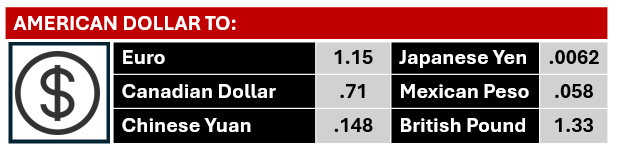
Key Currency Exchange Rates
Related Posts
ATA Truck Tonnage Index Unchanged in January
“After declines in November and December totaling 1.7%, tonnage was unchanged in January” said ATA Chief Economist Bob Costello. “This outcome is impressive considering the massive winter storm that brought cold temperatures and significant snowfalls to large parts of the country, including those that rarely see such storms. Furthermore, the terrible wildfires in California likely also caused freight disruptions. Softness in manufacturing and retail sales continue to be a drag on truck freight volumes as well, so the fact tonnage was flat is a positive sign.” In January, the ATA advanced seasonally adjusted For-Hire Truck Tonnage Index equaled 111.9 the same as December. The index, which is based on 2015 as 100, was up 0.3% from the same month last year, the first year-over-year increase since August. The not seasonally adjusted index, which calculates raw changes in tonnage hauled, equaled 110 in January, 1.1% above December’s reading of 108.9.
Key Currency Exchange Rates for Friday, 4/12/24
American Dollar to Canadian Dollar = 0.727771; American Dollar to Chinese Yuan = 0.138169; American Dollar to Euro = 1.065636; American Dollar to Japanese Yen = 0.006525; American Dollar to Mexican Peso = 0.060505.