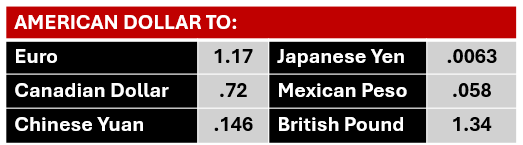
Key Currency Exchange Rates
Related Posts
Oil Trades Near $50 Before U.S. Data as Saudis Curb Exports
Futures rose 0.8 percent after advancing 0.6 percent on Monday, rebounding from a weekly loss. Crude stockpiles probably slid by 750,000 barrels last week, a Bloomberg survey showed before an Energy Information Administration report due Thursday. Oil last week fell the most since May on speculation rising global output may offset supply curbs led by members of the Organization of Petroleum Exporting Countries. The output-cuts deal is set to expire at the end of March and the group is likely to discuss an extension at its next meeting on Nov. 30. Its de facto leader, Saudi Arabia, said state oil company Saudi Aramco will ship 560,000 barrels a day less than customers are requesting in November. Saudi Aramco plans to supply 7.15 million barrels a day “despite very strong demand” that exceeds 7.7 million barrels a day, the Saudi Energy Ministry said in a statement. Click Read More below for more of the story.
ATA Truck Tonnage Index Unchanged in February
American Trucking Associations’ advanced seasonally adjusted (SA) For-Hire Truck Tonnage Index was unchanged in February after increasing 0.4% in January. In February, the index equaled 115.3 (2015=100) the same as January. “February was the first month that the index didn’t increase since July,” said ATA Chief Economist Bob Costello. “Despite a string of gains, the index is still off 1.8% from March 2020. The index is also off 4.2% from the all-time high in August 2019. It is important to note that ATA’s data is dominated by contract freight, not spot market. “Demand for trucking freight services remains strong, but for-hire contract carriers are capacity constrained due to the driver and equipment markets. The spot market has been surging as these carriers can’t haul all of the freight they are asked to move,” he said. “So the fact that the tonnage index hasn’t fully recovered is a supply problem, not a lack of demand. Other ATA data shows that for-hire carriers are operating around 7% fewer trucks, both company and independent contractor equipment, than prior to the pandemic.”